
THE WEIGHT OF GREAT BRITAIN
Opening: November 8, 2025 – 7 p.m. to 9 p.m.
The Weight of Great Britain brings together three essential voices of contemporary British sculpture: Anthony Caro, Nigel Hall, and David Nash. Three artists with distinct languages, yet united by a common concern — matter, space, and balance — concepts that have defined the sculptural identity of the United Kingdom in the second half of the twentieth century.
The title, The Weight of Great Britain, alludes both to the literal weight of the materials — wood, steel, bronze — and to the cultural weight of a sculptural tradition that connects landscape, industry, and abstraction. The exhibition proposes a dialogue among three ways of conceiving sculpture, through three key figures of contemporary British art.
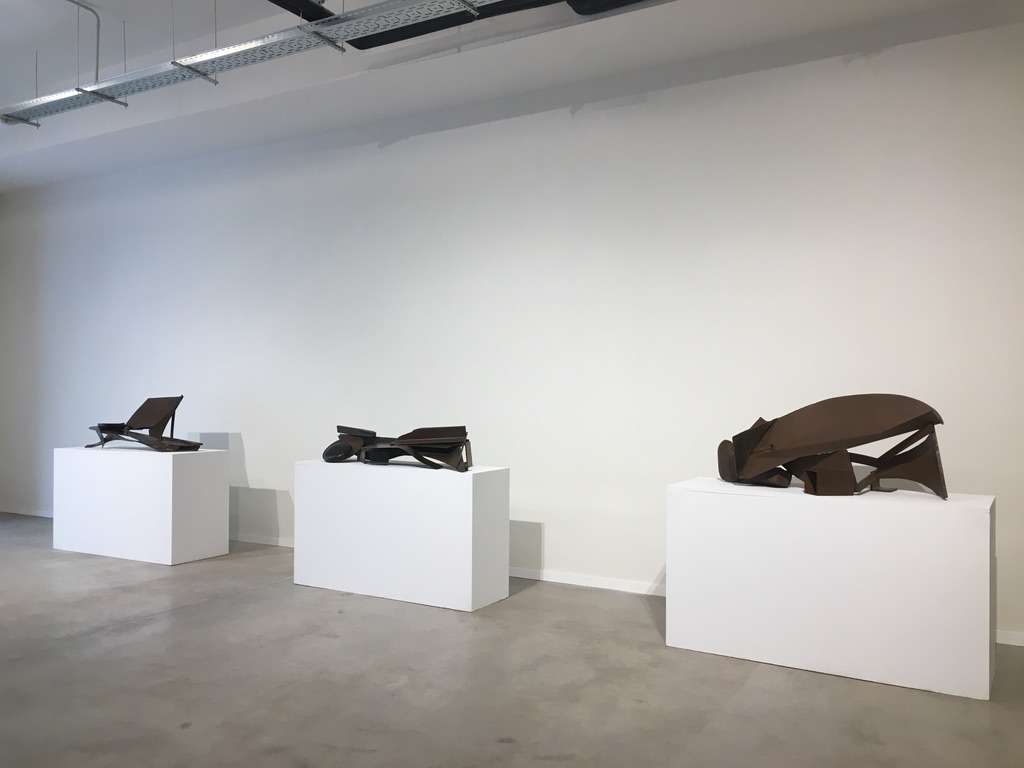
The show includes around a dozen works, spanning from the 1980s to the present day. Most are pieces of strong physical presence, in wood, bronze, or corten steel, ranging from small to monumental scale. Some are wall-mounted, others freestanding on pedestals or directly on the floor; the arrangement seeks chromatic affinities, creating a harmonious visual journey.
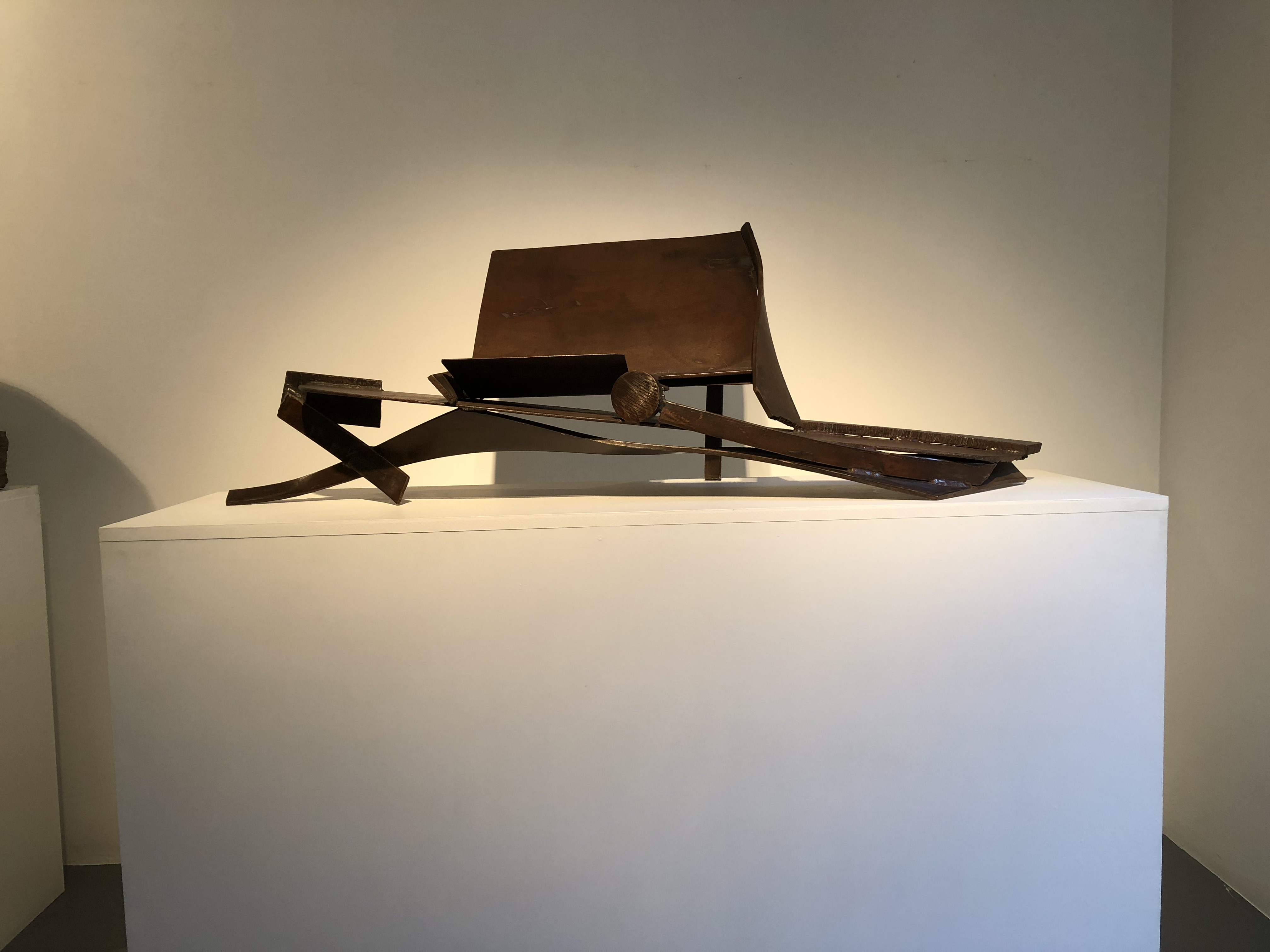
Anthony Caro (Surrey, 1924 – London, 2013), a disciple of Henry Moore, was a key figure in the renewal of British sculpture in the 1960s. He abandoned the traditional pedestal and worked directly with assemblies of industrial steel, opening the way toward abstraction. His works combine weight and dynamism, mass and color, demonstrating that industrial materials can generate emotion and energy. This exhibition presents three works from his celebrated Table Pieces series, designed to extend the horizontal plane upward or downward, creating multiple viewpoints while maintaining a harmonious balance reminiscent of still-life painting.
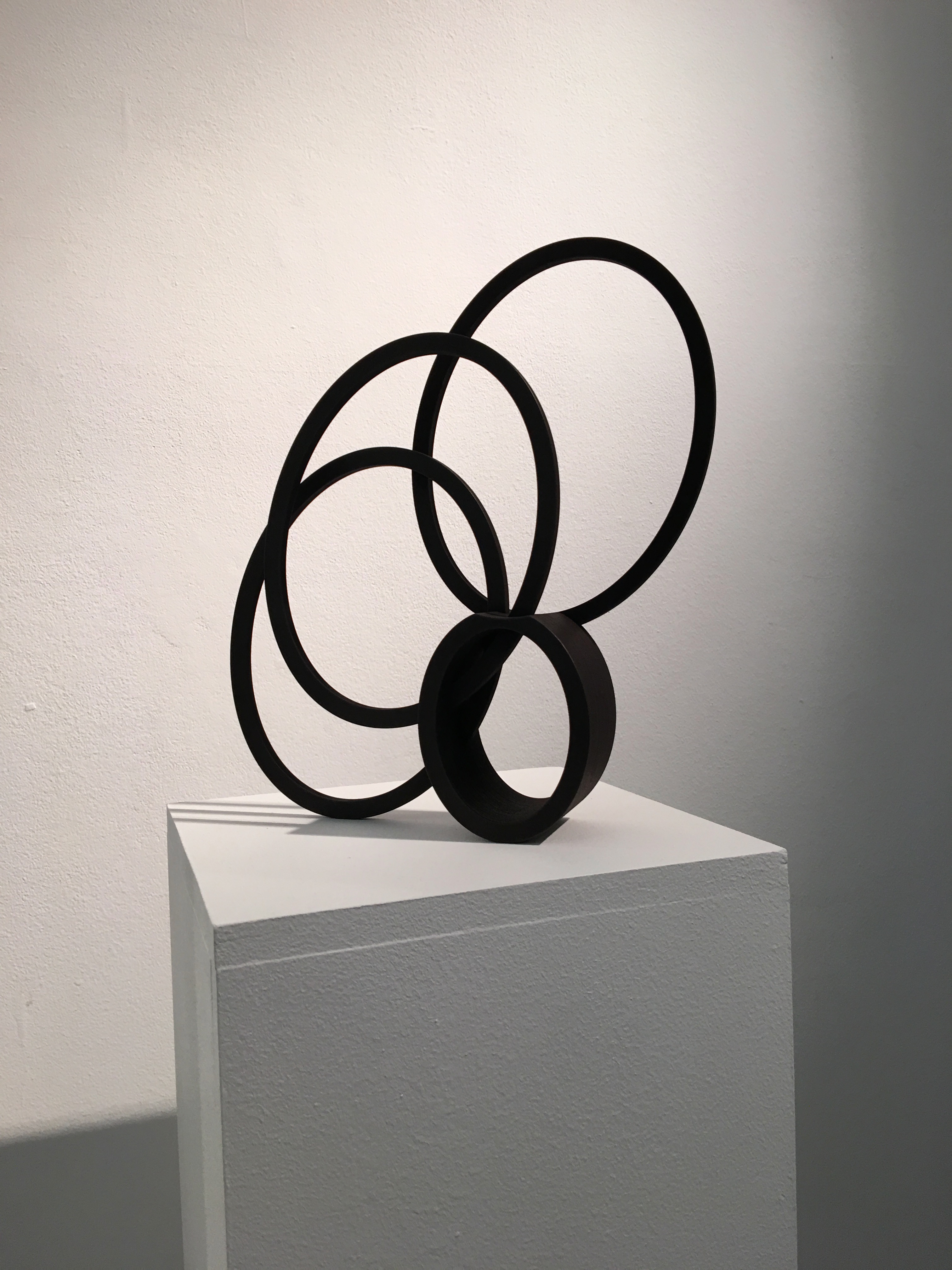
The Bristol-born artist Nigel Hall (1943), belonging to a later generation, continued this exploration of space from a more geometric and constructive perspective. For Hall, emptiness is as central as form, and his sculptures in steel or bronze function as three-dimensional drawings. Air and light become part of the composition, while the tension between mass and void creates a delicate balance between harmony and dynamism.
Finally, David Nash (1945), known for his association with Land Art, brings a more organic and natural dimension. He transforms natural material — wood — into a medium for reflecting on time and transformation. He turns nature itself into a sculptural organism: wood, charcoal, and fire become living forces that reveal time and change. Each work is an organism that breathes, ages, and transforms before our eyes.
British sculpture in the second half of the twentieth century is characterized by its attention to material, space, and formal construction. Rather than representing, it seeks for matter — steel, wood, or bronze — to express ideas through its structure and interaction with its surroundings. There exists a tradition of constructive clarity, balance, and control, often combined with an organic or sensory dimension.
Within this context, Caro, Nash, and Hall share a concern for the physical presence of the object and the interaction between weight and lightness, mass and void. Each, through different materials and vocabularies, understands sculpture as a way of thinking through form. Matter not only occupies space — it transforms and reveals it. Together, their works show different ways of understanding the “weight” — physical, material, and cultural — of contemporary British sculpture, articulating abstraction, attention to material, dialogue between form and space, and a balance between rationality and sensitivity.